

The Migrant Workers Office (MWO) is the overseas operating arm of the newly-created Department of Migrant Workers (DMW) tasked to protect the rights and promote the welfare of overseas Filipino workers (OFWs).
The MWO – Vancouver facilitates the verification of the employment contracts and OEC online applications of OFWs whose worksites are located in the Canadian provinces and territories of British Columbia, Alberta, Saskatchewan, Yukon, and the Northwest Territories.
Distressed OFWs may contact the MWO-Vancouver as follows:

MIGRANT WORKERS OFFICE
Labor Section – Philippine Consulate General in Vancouver
World Trade Center Office Complex, Suite 602, 999 Canada Place, Vancouver, BC, V6C3E1
Telephone No.: (+1) 604 641 1234
Email: mwo_vancouver@dmw.gov.ph
For emergency cases, call the POLO hotline (+1) 604 767 3354
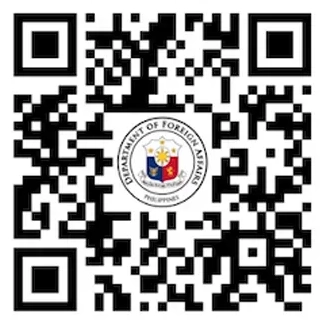
MWO Vancouver Appointment System: bit.ly/mwoappt2025
Guidance on the Verification of Employment (Click here)
- Effective 15 March 2023, all requests for MWO (POLO) Vancouver verification must satisfactorily comply with the revised checklist of documentary requirements;
- The revised Checklist includes the required Affidavit of Undertaking to be submitted by the Employer and Immigration Consultant, as the case may be. Another Affidavit of Undertaking shall likewise be submitted by the Philippine Recruitment Agency.
The Undertaking is aimed to ensure that Filipino workers are not being charged fees for the LMIA services and other recruitment-related fees. This new requirement is based on the new amendments to Canada’s Immigration and Refugee Protection Regulations.
Philippine laws and regulations likewise prohibit fees to be charged against the workers (which should however be shouldered by the employers). These prohibited fees include all services related to the act of hiring or recruitment or securing employment, such as LMIA, work permit, visa fee, airfare, POEA processing fee, OWWA membership contribution, among others.
This new requirement is also being implemented to address the increasing fraudulent practices among Immigration consultants who have reportedly been charging exorbitant fees against the workers, oftentimes without the knowledge of the employers. Fees being charged by some unscrupulous immigration consultants are being done in the guise of “immigration service”. - Employers in Canada will be required to submit an affidavit of undertaking (which must be notarized by a commissioner of oath) that he will assume responsibility to pay for all recruitment costs, including LMIA work permit application, visa fee, airfare from the Philippines to jobsite, POEA processing fee, OWWA membership fee and insurance coverage for the workers. The employer shall also ensure that his immigration consultant or third party representative had not charged any recruitment-related fees against the Filipino worker, and will undertake to reimburse the same should there be fees paid by the worker. This requirement will be required for both direct hire exemption as well as regular agency recruitment.
- Documents submitted must be arranged in the prescribed order or sequence for easy evaluation and processing. The list of documents sent for verification must be enumerated in the covering letter addressed to the Labor Attaché;
- Employers are advised to make sure that the employment contract/employment offer must be dated and signed by the worker/employee and the employer ON ALL PAGES;
- MWO verification of the required documents is a requisite for registration by the Department of Migrant Workers (DMW) and the processing of the Overseas Employment Certificate (OEC) for the recruited or hired Filipino worker. The verification function is intended to ensure the legal existence of the employer/company, its financial capacity to pay the salary offered and comply with the terms and conditions of employment. It also verifies the authenticity of the work permit of the worker;
- The hiring of Filipino workers by foreign employers or companies may be done thru (a) agency hiring; (b) direct hiring; and (3) government to government arrangement as agreed upon thru a Memorandum of Understanding (MOU), or bilateral labor agreements;
- As a general rule, Philippine laws and regulations allow the deployment of Filipino workers for overseas jobs based on agency-hiring. This means that foreign employers or companies hiring Filipino workers must deal with and enter into a recruitment agreement with a duly licensed Philippine recruitment agency for the purpose of sourcing out, screening and selecting suitable and qualified applicants. The Philippine recruitment agency shall be responsible for the submission and processing of the documents verified by MWO to the DMW, and shall assist hired or selected workers with all the pre-travel and deployment requirements in the Philippines including the pre-departure orientation service (PDOs). As a protective measure, the PRAs shall be jointly and severally liable to the workers in case of contractual violations of the terms and conditions of employment;
- Direct-hire processing of contracts, on the other hand, is merely an exemption to the rule. It is not a matter of right. It may be allowed subject to certain criteria or conditions. The Migrant Workers Office (MWO) may or may not recommend direct hiring, which authority however rests solely with the Secretary (Minister) of the Department of Migrant Workers. Such being the case, direct hiring may be recommended or allowed on a one-time/one transaction basis only for company/business employers in Canada who are hiring up to a maximum of 5 workers (in lieu of the current practice of allowing piecemeal and cumulative processing of up to 5 workers). An employer who had previously availed of the direct-hire exemption will no longer be allowed to directly hire and is kindly advised to tie-up with, and process their contracts through a duly licensed Philippine recruitment agency of their choice;
- Filipino workers being employed on direct-hire must be for jobs belonging to TEERs 1, 2 & 3 only, of the updated National Occupation Classification (NOC) of Canada and must be offered an hourly wage rate of not lower than the provincial/territorial/area median wage as prescribed in the Job Bank website (www.jobbank.gc.ca). Employers hiring Filipino workers under TEERs 4 & 5 will have to be processed through a Philippine recruitment agency.
- Submission of the application to our office for direct hire exemption shall, at all times, be done directly by the employer. No intermediary or third party representatives shall be recognized except those registered as recruitment agencies in Canada. Documents submitted by third party representatives shall be disapproved and returned.
- Incomplete submission of documents, payments, or other deficiencies including missing signatures shall not be processed and will be immediately returned back to senders. Employers are advised to strictly comply with all the requirements to avoid delay. MWO Vancouver reserves the right to refuse applications which are not in conformity with the minimum requirements and standards prescribed under Philippine laws and regulation.
- All documents should be sent in two (2) separate sets or copies together with a self-addressed pre-paid return envelope (Canada Express Post, others) to the address below:
- The Labor Attaché
Migrant Workers Office (MWO)
Labor Section–Philippine Consulate General
Suite 601, 999 Canada Place
Vancouver, BC V6C 3E1
- The Labor Attaché
Checklist of Requirements
- Agency Hiring (Skilled Workers)
- Agency Hiring (Caregivers)
- Direct Hiring
- Balik Manggagawa / Returning Workers
- OWWA Membership
MWO Downloadable Forms
- Master Employment Contract
- Addendum to the Employment Contract
- Affidavit of Undertaking – by Employer
- Affidavit of Undertaking – by PRA
- Employer’s Company Profile
- OWWA Membership Form
Rights at Work-Complaints and Assistance (Click here)
The Migrant Workers Office (MWO) in Vancouver is tasked to ensure that all Filipino temporary workers being hired to work in Canada are covered by an employment contract whose terms and conditions are compliant with employment standards and laws of both Canada and the Philippines.
As a legal document, the employment contract spells out the rights, duties and responsibilities of both the employer and the worker. Essentially, workers have the right to receive a pay not lower than the approved minimum wage, agreed number of working hours, payment of overtime pay, leave entitlements, valid cause of termination, and others. In addition, as part of Philippine requirements, the employer must shoulder the cost of transportation from his place of origin, especially for low wage position as well as those in the agricultural sector. MWO shall likewise see to it that the employment contract provides for the employer’s obligation to repatriate the worker in case of death during the period of the employment contract.
The employment contract may not however be specific on certain rights accorded by law. This does not mean however that they cannot assert these rights. Thus, workers have the right to be treated fairly at work, to have a safe workplace, to have access to health services, and to report violations of his employment rights to the government authorities. Any diminution of such rights and benefits, including unfair practices and discrimination, is considered illegal.
Rights of Temporary Foreign Workers
Foreign workers who come to Canada on a work permit and who have not yet obtained permanent resident status must be aware of their rights at work. Under Canada’s Temporary Foreign Workers Program, it is not allowed for the employer to take possession of the worker’s passport and other official documents. The worker must know that he should keep a copy of his employment contract as well as work permit, and to demand for a copy from his employer if he was not given one.
A Filipino TFW should likewise know that regardless of his work position or immigration status as a foreign worker, his rights are protected by Canadian laws, whether federal or provincial. Thus, his employer cannot treat him unfairly or subject him to forced labor or exploitation. His employer cannot threaten him with deportation and he has every right to report such prohibited actions to the authorities. His employer is prohibited from retaliating or taking action against him by reason of his reporting of such complaints and violations.
Right to Safe and Healthy Workplace
A worker cannot be forced by his employer to work if he is sick or for such number of hours in excess of his agreed working hours without his consent. He cannot also be forced to work in an unsafe or dangerous job. In such a situation, the employer must first give necessary training, provide safety equipment and make sure that the danger or risk is removed.
It is important that the employer must assume responsibility for the medical and health coverage of the TFW until he becomes eligible to the provincial health care program. In the case of agricultural worker, the employer must see to it that the worker’s accommodation is suitable and affordable.
Right against Unfair Practices and Discrimination
The employment laws in Canada provide tough measures against unfair labor practices and discrimination at work. For one, the employer cannot deduct from the employee’s wages any amount not otherwise allowed by law. Thus, it is illegal for the employer to deduct the costs of breakage, damages, theft, among others against the worker’s pay without a court order. The employer cannot likewise discriminate against the employees by paying them differently for performing similar work except for justifiable grounds such as seniority, merit system, and the like. Discrimination at work is also not allowed by reason of gender, sex, race, ethnic origin or religion.
Right against Fraudulent Hiring and Human Trafficking Violations
A number of foreign workers hired under the TFWP had reportedly been exploited in the past by their employers, foreign recruiters and/or immigration consultants. The abuse and exploitation come in various schemes but can be described in most cases as recruitment which involves illegal charging of exorbitant amount of money.
Filipino workers directly hired from countries outside the Philippines, such as, Taiwan, Singapore, Hong Kong, Middle East countries, and others, have been solicited a substantial amount of money allegedly representing the recruitment costs or fees. This practice is however prohibited under both Philippine and Canadian laws. This is also considered a violation of ethical practice of recruitment which makes it illegal to charge recruitment fees and costs from the applicant-workers as this is considered expenses which should be shouldered by the employers. Immigration consultants are also prohibited from charging for recruitment fees other than for their immigration services.
Filipino TFWs who have been recruited from third-countries (meaning, not directly from the Philippines) and were victimized by these unscrupulous recruiters are advised to report this to the competent authorities in order to recover the excessive amount paid by them and to prevent further abuse. Complaint may be filed under anonymous reporting. Filipino TFWs are however encouraged to report this matter without fear of being deported or harassed by their employers.
TOLL FREE CONTACT NUMBERS FOR ASSISTANCE
For assistance on labor-related matters, please contact the Migrant Workers Office through telephone no.: (+1) 604 641 1234 or MWO hotline (+1) 604 767 3354.
A. To report an abuse or violations of the TFW Program, please call Service Canada Confidential Tip Line at Toll Free line:1-866-602-9448. For Online Fraud Reporting at Toll Free: 1-877-952-6914 or WorkBC Contact Centre at:1-877-952-6914
To anonymously report a case for trafficking, please call: Crime Stoppers National Tip Line at: 1-800-222-TIPS (8477) or Immigration Refugees and Citizenship Canada (IRCC) Toll Free line : 1-888-242-2100
B. For Employments Standards Offices (concerns about pay, working hours, unfair treatment, illegal deductions, etc.):
British Columbia 1-800-663-3316
Alberta 1-877-427-3731
Saskatchewan 1-800-667-1783
Yukon 1-800-661-0408
NWT 1-888-700-5707
C. For Workplace Health and Safety Offices (injuries, sickness, compensation, etc.):
British Columbia 1-888-621-7233
Alberta 1-866-415-8690
Saskatchewan 1-800-567-7233
Yukon 1-800-661-0443
NWT 1-888-661-0792